
 Open 24/7 | Call (817) 279-0582

When Should You Switch Your Heat Pump to Emergency Heat?
If you have a heat pump, there’s a setting on your thermostat that most people never touch: emergency heat. It sounds like something you’d only use if the house were falling down around you. At Daffan Cooling & Heating, we get a lot of questions about it every winter in Granbury, so let’s talk about when it makes sense to use it and when it’s better to leave it alone.
It Depends, but Here’s Where to Start
There are a lot of variables when it comes to heat pumps and emergency heat. First, we recommend switching to emergency heat if you’re trying to heat your home and realize your system isn’t working or isn’t keeping your home warm. That’s especially true during extreme weather, when we get several days of freezing precipitation in a row.
Emergency or auxiliary heat is just another term for a second stage of heat. It’s not as scary as it sounds.
Situation One: Your Heat Pump Stops Heating
Signs Your Heat Pump Isn’t Keeping Up
You may need emergency heat if you notice:
- The house keeps getting colder even though the system is running
- Air from your vents feels cool or lukewarm for long periods
- The outdoor unit isn’t running at all
- The outdoor unit is covered in ice that won’t clear
In these cases, switching to emergency heat keeps your family warm until a technician can get out there. It’s a stopgap, not a fix, so it’s important to book heating repair as soon as you make the switch.
Situation Two: Freezing Rain and Ice
Here in Hood County and the surrounding area, we tend to get a few days a year of freezing rain or ice. During those weather events, it’s usually better for your system and your heating output to switch to emergency heat.
Why Ice Storms Are Hard on Heat Pumps
When freezing rain coats the outdoor unit, ice can build up faster than the defrost cycle can melt it. The fan can get iced in, airflow through the coil gets blocked, and the unit ends up working hard without producing much heat. Switching to emergency heat lets the outdoor unit sit out the storm while your backup heat keeps the house comfortable.
Just don’t forget to switch it back once the outdoor conditions improve.
Newer Systems Handle Winter Weather Better
Some newer heat pumps seem to do a better job than older systems during icy weather. Variable-speed compressors, smarter defrost controls, and better coil designs all help modern units keep running in conditions that would have stalled a system from 15 or 20 years ago.
If your heat pump is newer, you may find you rarely need emergency heat at all. If it’s older and struggles every time the weather turns, it might be worth talking with us about heating installation options built for North Texas winters.
When You Shouldn’t Use Emergency Heat
Emergency heat is helpful, but leaving it on when you don’t need it is a costly habit. Avoid switching to it:
- Just because it’s cold outside. Your heat pump is designed to run in cold weather, and it will bring in auxiliary heat on its own if it needs help.
- During a normal defrost cycle. The steam and noise are part of normal operation.
- To warm the house up faster. It doesn’t heat faster in any meaningful way, and it costs more to run.
How to Switch It On (and Back Off)
Most thermostats have an “EM Heat” or “Emergency Heat” option in the mode menu or as a separate switch. When it’s on, many thermostats display an indicator light or message so you know it’s active.
When the ice melts or your system is repaired, put the thermostat back into regular “Heat” mode. If your thermostat makes this confusing, we can help you find a model that’s easier to read and use. Our thermostats page has more on the options we install.
A Quick Reference for Winter
Keep this simple rule of thumb on the fridge:
- System not heating? Switch to emergency heat and call us.
- Freezing rain or ice? Switch to emergency heat until it passes.
- Just a cold day? Leave it in normal heat mode.
- Weather improved or system repaired? Switch back to normal heat.
If you’re not sure what kind of system you have or how your backup heat works, our heat pumps page is a good place to start.
Get Help Before the Next Ice Storm
The best time to sort out your emergency heat questions is before freezing rain is in the forecast. Our technicians can walk you through your thermostat, check that your backup heat is working, and make sure your heat pump is ready. Homeowners in Granbury, Weatherford, Stephenville, and across the area can book a visit with Daffan and head into winter confident about every setting on the wall.
When is the Last Time You Replaced Your Filters?
Most filters should be changed every 1 to 3 months, but it’s the first thing homeowners forget. A clogged filter makes your system work harder, drives up energy bills, and shortens equipment life. Stock up and stay ahead of it.
Shop Now






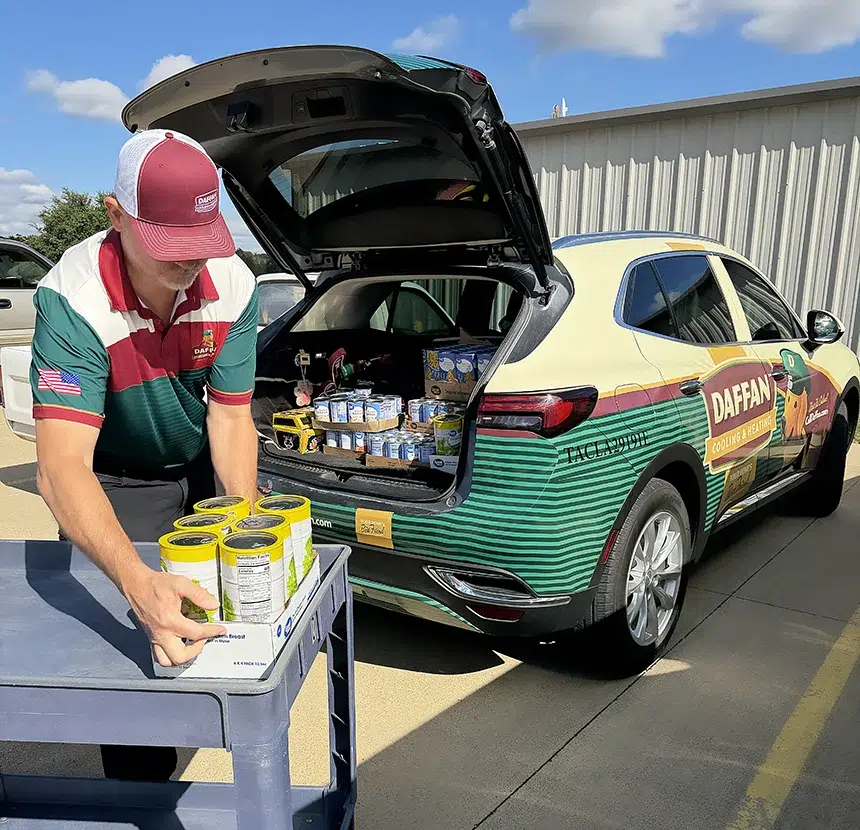


We Show Up for Our Community (and for Each Other)
Being part of this community means more than running service calls across Hood County. It means showing up for the parade, investing in our team, and genuinely caring about what happens in this town. The people who represent Daffan out in the field are the same ones celebrating together, growing together, and looking out for each other off the clock. Community starts from the inside out!
Learn More

Proudly serving Texas for 25+ years
Your Neighborhood Is Our Neighborhood
We’ve been running calls across Hood County and the surrounding area for over 25 years. Chances are, we already know your street.